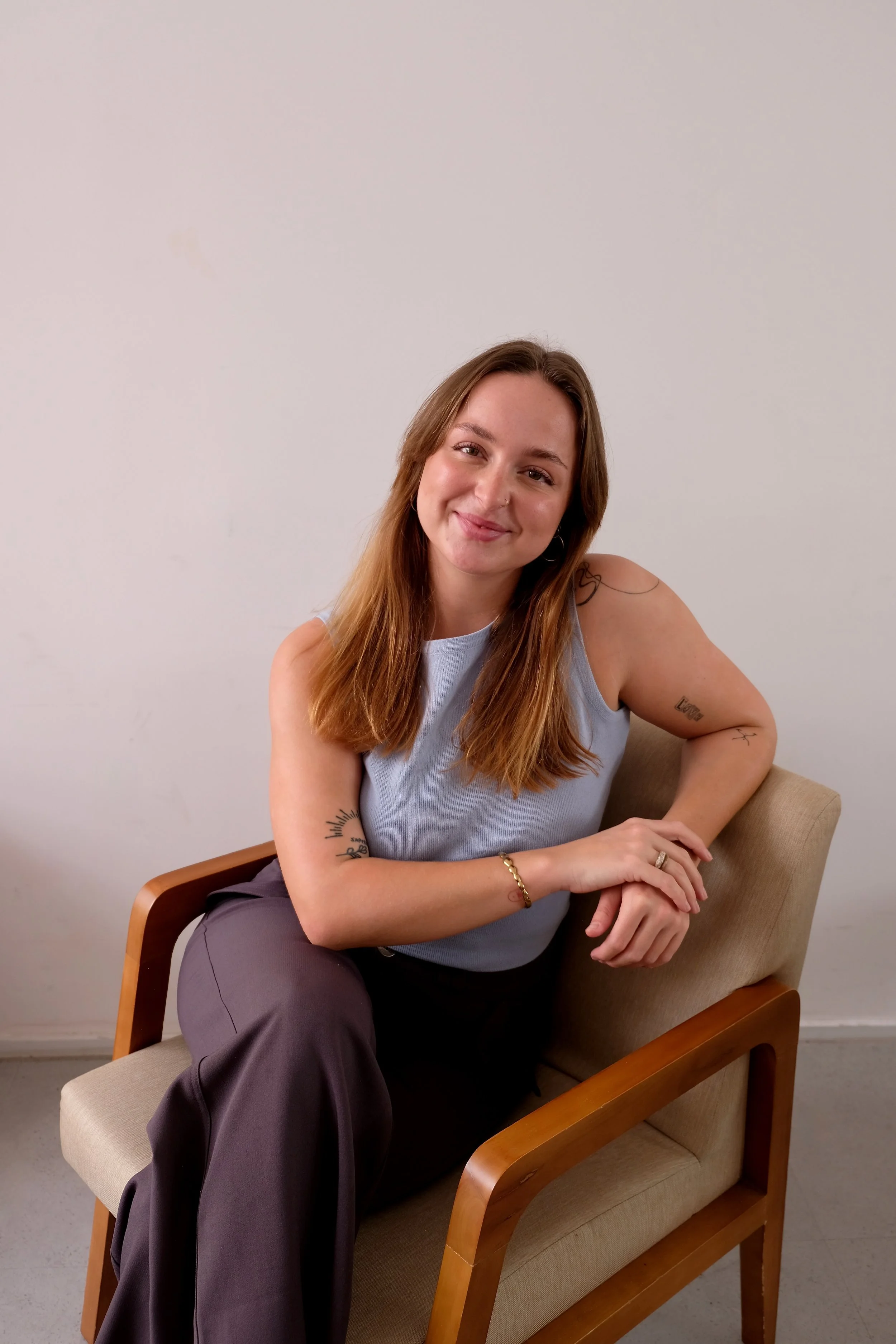
Lorena Vest grew up in a small town near Frankfurt and, in 2020, moved to Hamburg to begin a dual study program in Business Administration at the Hamburg School of Business Administration—completing her degree in partnership with Shell, with time spent living and working in Milan along the way.
After graduating, she spent a year in corporate marketing at Shell Energy Europe before making a deliberate decision to follow a longer-held passion: the arts, culture, and the power they have to bring people together. That shift took her to Lisbon, where she is now completing her Master's in Management of the Arts and Culture at Universidade Católica Portuguesa—ranked #2 worldwide in Cultural Management.
Her thesis examines the representation of persons with disabilities in the German visual arts field, and alongside her research she is developing a practical diversity audit for cultural institutions seeking to understand and strengthen their inclusion practice. Her broader research interests lie in the cultural policies that shape how artists with disabilities are represented across the arts sector.
In Lisbon, Lorena has been gaining hands-on experience in exhibition curation, editorial writing, and artist liaison—working with institutions including the Centro de Arte Moderna of the Fundação Calouste Gulbenkian and Carpe Diem Arte e Pesquisa.
Beyond her professional life, Lorena is a hobby photographer, capturing moments under the handle @capturedwithlo.ve on Instagram.
Above all, she is passionate about the role culture plays in bringing people together and about building the kinds of institutions that make that possible.
Art & Cultural Manager
Thought Leadership & Research Interests
aiming to make a differenceCURRENT - SINCE 09/25
M.A. THESIS
Beyond D(v)isability: The Representation of Persons with Disabilities in the Visual Arts Field in Germany
Drawing on Disability Studies, Human Rights Studies, Museum Policy Studies and field research across German cultural institutions, this research adopts a conceptual framework that explores how art and culture interact with broader social constructions and institutional practices, with particular attention to how these dynamics influence the representation of artists with intellectual disabilities in the german visual arts field.
This thesis contributes new value to the field by generating original empirical data on the presence of artists with intellectual disabilities in major German art institutions—a type of information that is currently scarce, fragmented, or entirely missing.
Research areas: disability representation · cultural policy · visual arts · diversity in institutions · Germany